
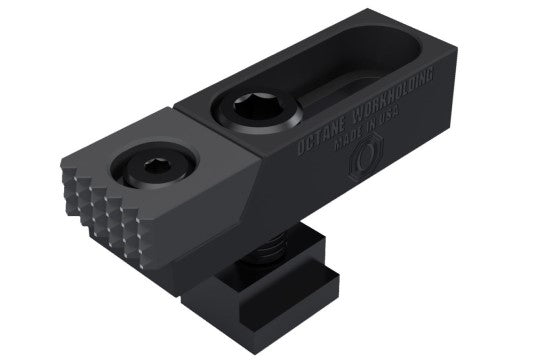







Very happy with the purchase. I now have 16 of these. They work great.
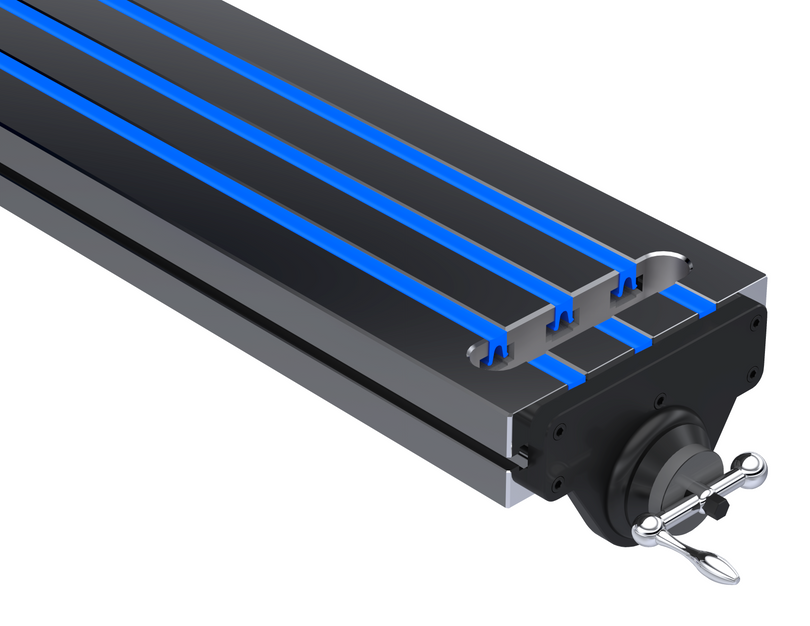
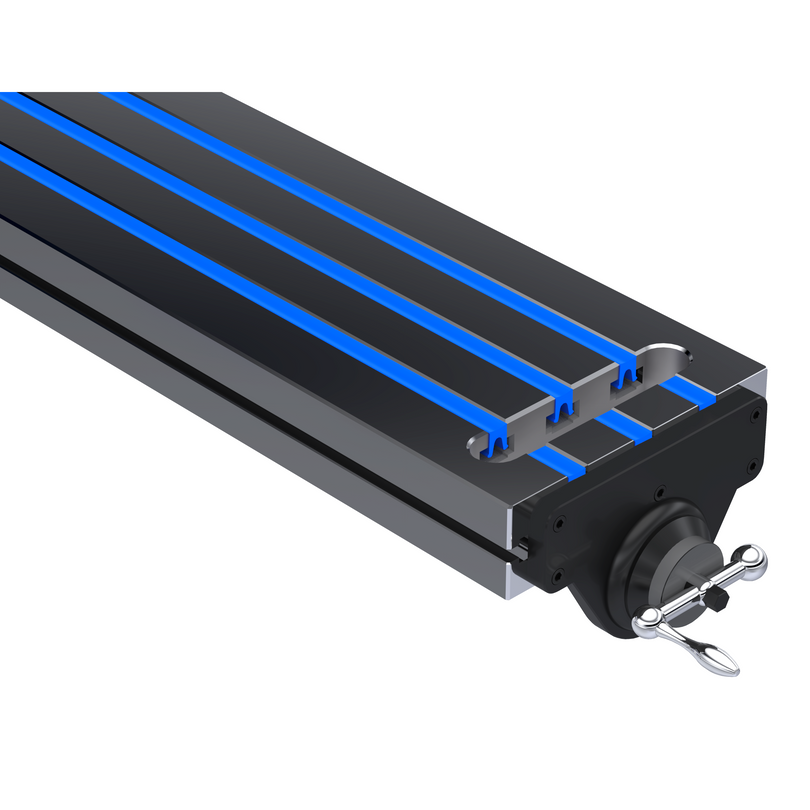
The Octane t slot chip guard is great, very heat and chip resistant, and a great addition to any mill. Highly recommend it.
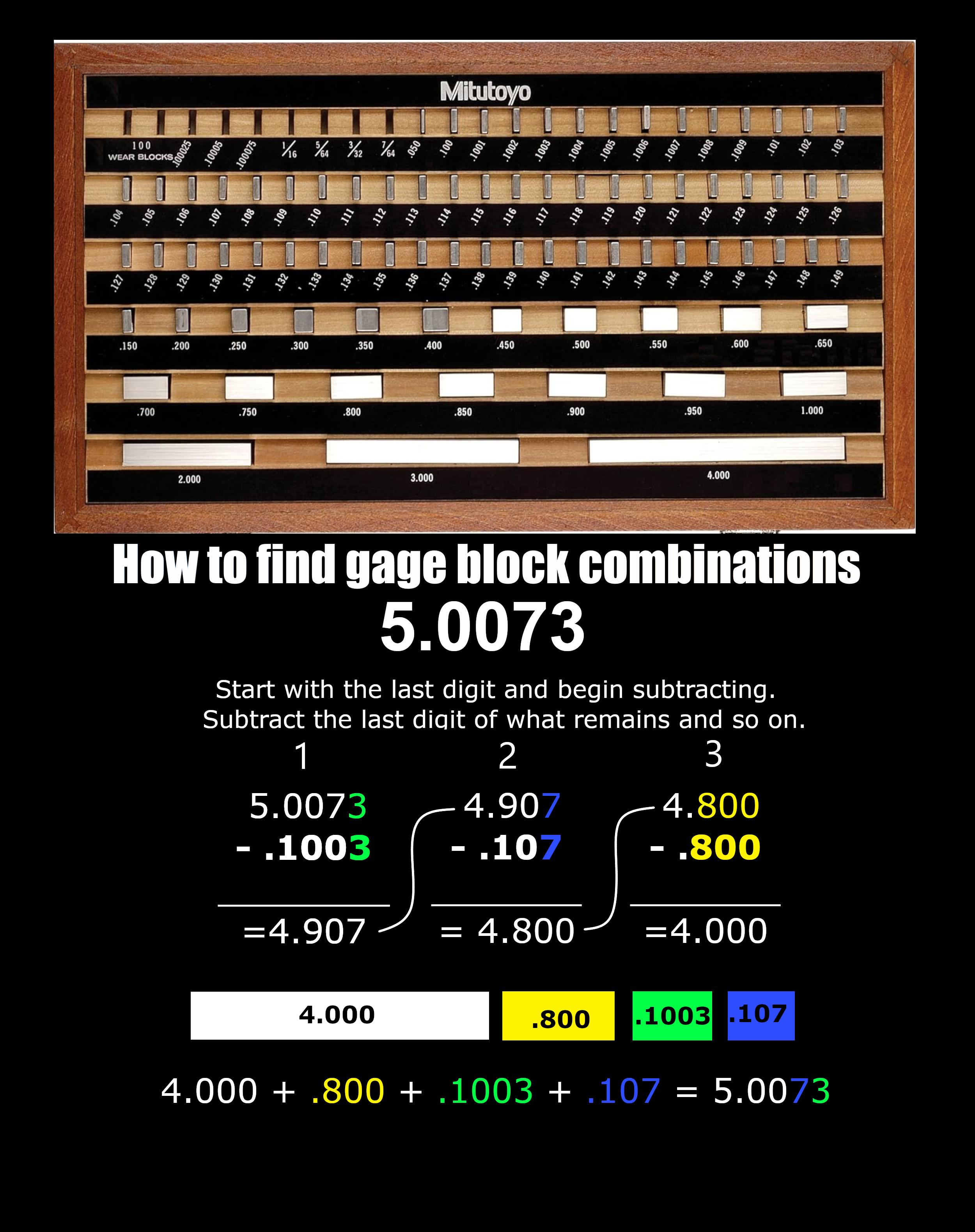
The trick to calculating gage block stacks is to start with the last digit and begin subtracting. If the last digit is a tenth (.0001") digit the first block will always be one of the tenth blocks. In this example, we chose .1003 as it is the only block possible. Next, we subtract this block from the target number. 5.0073 minus .1003 equals 4.907. From this point, we look at the last digit of 4.907 inches. 7 is highlighted blue and the next number we are looking for. In an 81 piece set there are several blocks that end in 7, but choosing .107 leaves us with a nice round number of .800 inches. 4.907 minus .107 equals 4.800 inches. We have a .800 inch wide block in this set so we are done with math. The last block needed is 4.000 inches which may be obvious. It may seem complicated, but its really very simple if you follow the examples in this article.
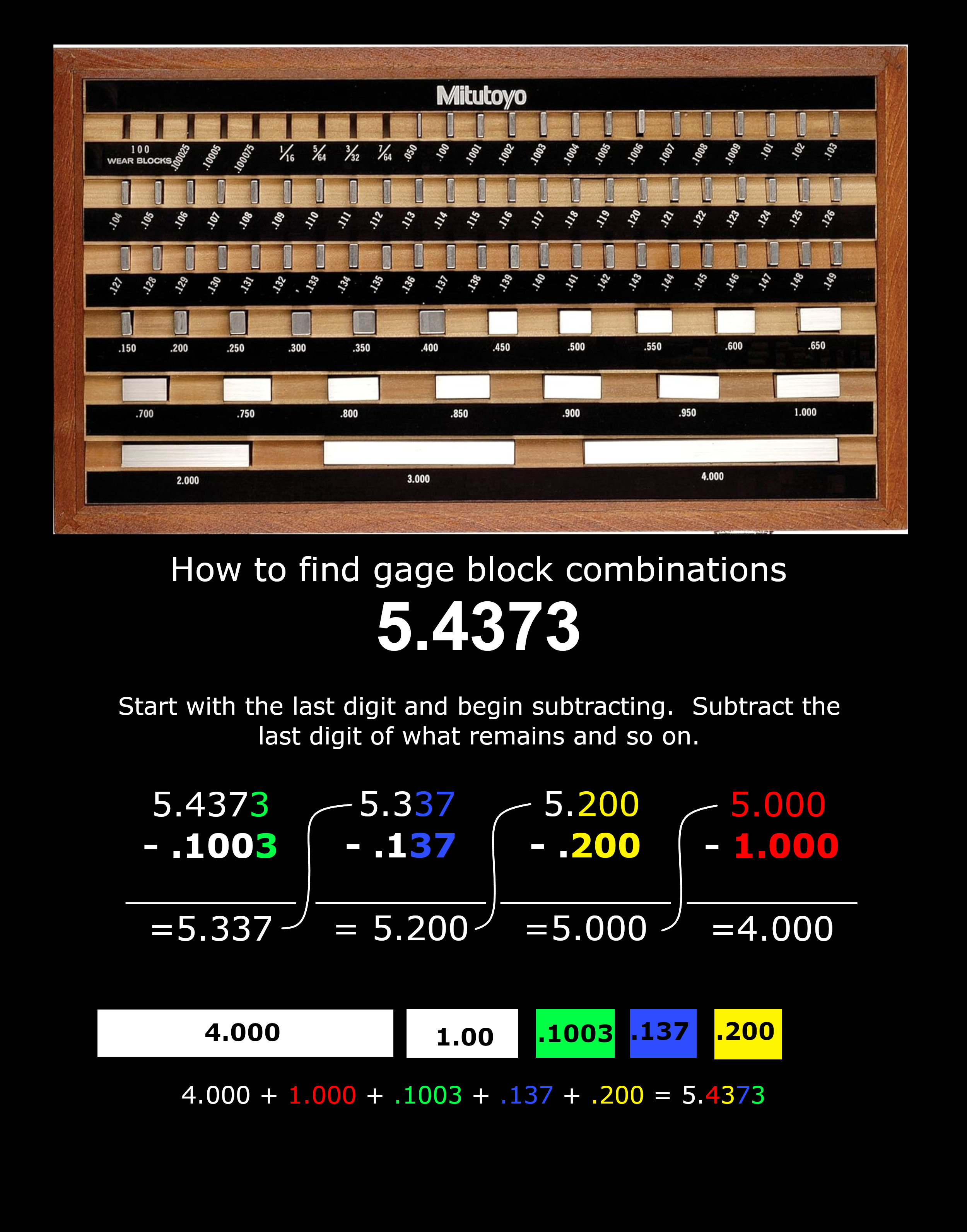
In this example, 5 total blocks will be needed to complete our stack. The same rules apply. We start with 5.4373 and look to the last digit which happens to be 3 tenths and we have no other possible blocks that end in a tenth other than .1003 inches. We subtract this block from the original number and we are left with 5.337 inches. We could choose several blocks that end in 7, but choosing .137 reduces the total number of blocks needed. A good rule of thumb is to choose the largest block possible, but not exceed the number. (highlighted in blue). We see .107, .117, .127, and .147 could also be selected, but .137 works best in this example as it matches up with the number we are subtracting from. 5.337 minus .137 leaves us with 5.200 inches which is easy math from here on out.
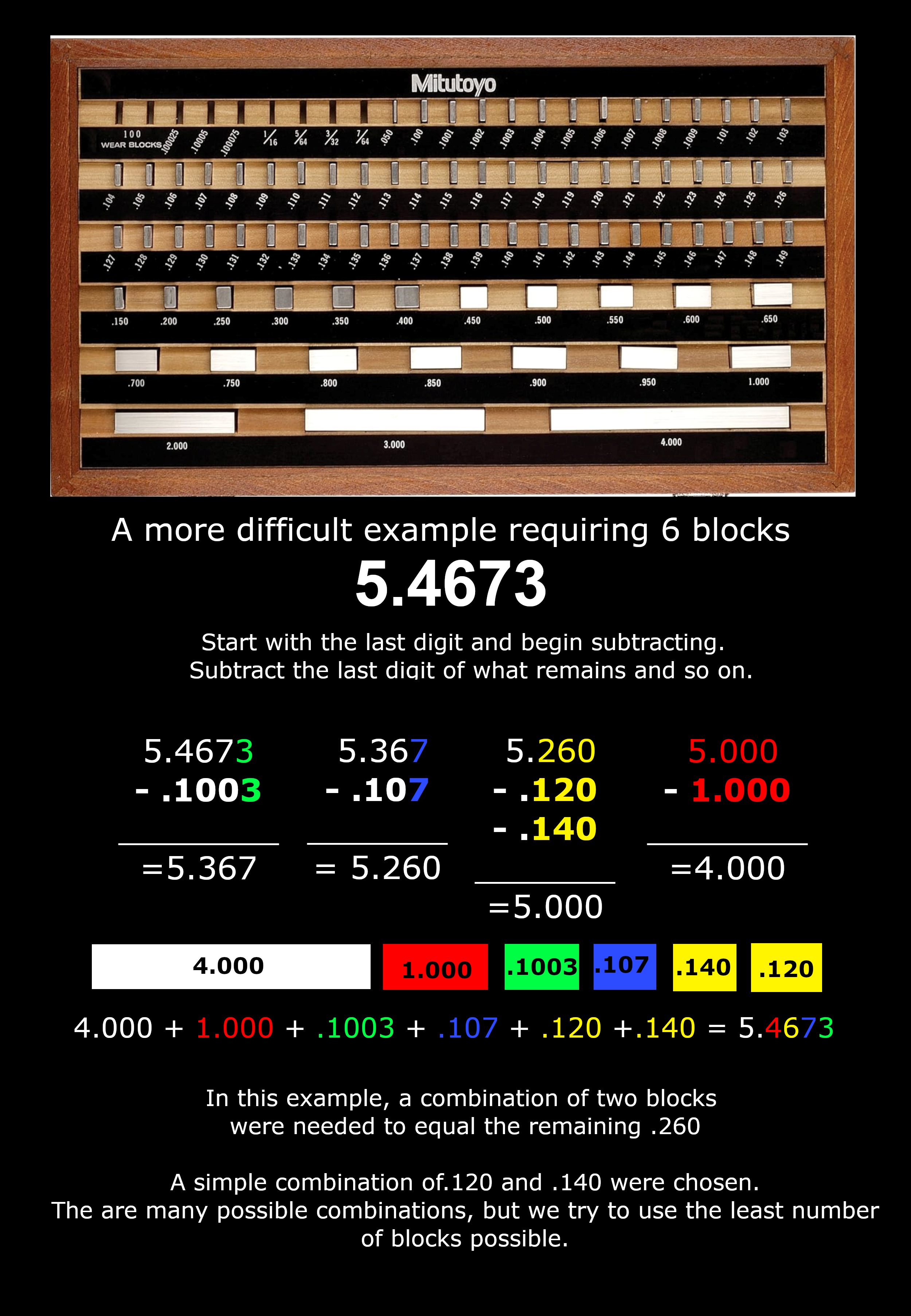
If you've made it this far, you probably have the concept down. The only change here is we need to add two blocks together at the step highlighted in yellow to get .260 inches as there is no .160 inch thick gage block.
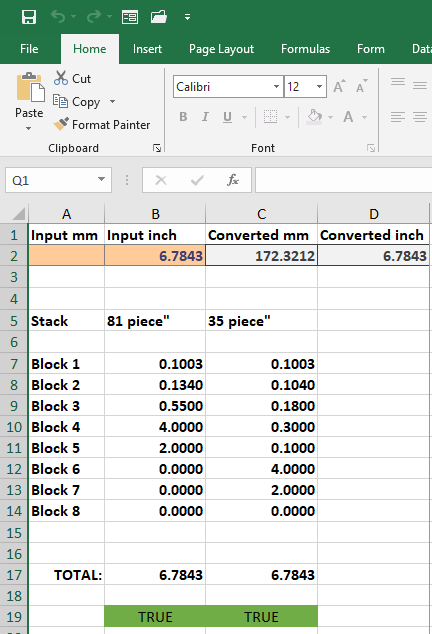
We came across an excel calculator that works well. Here is a link. It is $3.00 and we have no association with the author.
https://www.machinistkalc.com/2021/03/gage-block-excel-calculator.html